Wednesday, 24 January 2018

Easy Way to Use Godaddy Website Builder

Easy Way to Use Godaddy Website Builder

Godaddy website builder is a provider of a domain and hosting services and website development. With your, GoDaddy is easier to create a website. Website Builder v7 version currently comes with a site builder tool that does not require any technical skills or coding experience. You can choose from hundreds of themes with placeholder content and images to get started quickly.

to start the GoDaddy setting, here's what you should do.
1. Sign in to your Account Manager.

2. Click the Site Builder / InstantPage button to be able to view your website account.

3. Next to the account, you want to use, click Manage.

4. Select a domain from your account, enter a domain name listed elsewhere, or create a subdomain by using the domain in your account for your website, and then click OK.

5. Put the theme you want to use for your website, and then click Select Themes. (If you look at the pointer on the thumbnail image and click Full Screen, you get a better view on the theme's design.)

6. On the Set page, enter the business name and email address of your contact. Or, you can add more information that will help us make your business discoverable to your customers:

Fill the Set page:

Business Categories: Choose the categories that best describe your business type.
Address: An address can easily create a map of your location that helps your registration appear in the location search results.
Phone: You can enter your current business phone number.
Social relations: You can also contact your Facebook and / or Twitter account with your website.

7. When you're done, click Next.

8.  If this is the first time you have configured Website Builder v7, we show you the overall picture of the short video in the tool. When you're ready, click Close Video to start creating your site. (Your work is automatically saved when you go.)

When you're ready, click Publish to show your site to the outside world

Saturday, 20 January 2018

How to Prevention of Yellow Fever: Diagnosis, Causes, Symptoms And Treatment

How to Prevention of Yellow Fever: Diagnosis, Causes, Symptoms And Treatment

How to Prevention of Yellow Fever: Diagnosis, Causes, Symptoms and Treatment

Yellow fever is a disease caused by a virus that is transmitted through an intermediate mosquito. Generally present in areas of South America, Africa, and the Caribbean.

The mosquito that carries the virus inside the body then spreads to residents around the sufferers and tourists who are visiting the area to cause fever and serious disorders of the liver and kidneys. Viral infections that have propagated to the liver also interfere with the function of this organ, causing changes in skin color to turn yellow.

Causes of Yellow Fever.

The spread of yellow fever is caused by the bite of Aedes aegypti mosquito which initially bites the sufferer of this disease, generally human and monkey. This mosquito then transmits yellow fever among fellow humans or other monkeys, or from humans to monkeys, and vice versa. In addition to the Sahara deserts in Africa and the tropical regions of South America, or even clean human settlements, do not escape the breeding of these mosquitoes.

The virus that eventually settles in the salivary glands of Aedes aegypti mosquitoes and then into the human bloodstream or other monkeys through the bite and cause pain in the new host it inhabits. Beware of dusk until dawn because at these times the spread of yellow fever virus most often occurs, when Aedes aegypti mosquitoes become very active.

Symptoms of Yellow Fever.

Yellow fever causes fever, headache, nausea, vomiting, and muscle pain in the sufferer. Generally, there are three stages of yellow fever virus infection with an early stage that tends to be indistinguishable from other viral infections, or it may be asymptomatic. Initial stages of infection can last for 3-4 days and usually begin 3-6 days from viral infection or since mosquito bites occur. Other symptoms that may arise are a loss of appetite, sensitive excessive to light, and redness of the eyes, tongue, and face. The second stage is the stage of remission, where the patient's condition appears to be improving. In general, the patient recovered at a stage that lasted approximately 2 days. Even so, it is advisable to stay alert because in about 15-25 percent of patients can enter the third phase of a riskier and can lead to death.

In the third phase, beware of the appearance of damage to the liver that can make the color of the eyes and skin to yellow. In addition, it can also appear fever accompanied by bleeding in the body, vomiting blood, liver inflammation or hepatitis, as well as multi-organ damage.

Diagnosis of Yellow Fever.

Symptoms of yellow fever are quite common and can be experienced also by some other diseases, such as malaria and dengue fever so that the diagnosis of yellow fever is obtained one of them based on the history of the journey conducted by the patient. After that the doctor will perform a blood test to determine the presence of virus types contained in the body. See your doctor as soon as you feel the symptoms of yellow fever mentioned above, especially after or are on a visit to countries that have cases of yellow fever.

Treatment of Yellow Fever.

There is no antiviral medication that can cure yellow fever. However, supportive handling is necessary to deal with symptoms. Common symptoms such as fever, headache, and muscle pain can be treated with painkillers, such as paracetamol or ibuprofen. However, other diseases caused by yellow fever complications, such as damage to organs triggering conditions of kidney failure would require appropriate follow-up treatment at the hospital.

Treatments that can be recommended for yellow fever may include oxygen, blood pressure, dialysis for people with renal failure, and plasma cell transfusions to increase blood clotting levels.

Prevention of Yellow Fever.

Yellow fever can be prevented by administering a vaccine before someone travels to an area potentially spreading yellow fever. The vaccine can be done at least ten days before departure time with the ideal time of vaccine is 3-4 weeks. Safe age to receive this vaccine is a patient with an age range between 9 months to 60 years to get rid of the risk of inflammation of the brain until death. Side effects can last for 5-10 days post vaccine. The side effects are perceived as common and mild, ie fever, headache, muscle pain, and fatigue and pain in the area of vaccination injection. In some rare cases, yellow fever vaccination can lead to allergic reactions, reactions to the nervous system, and even death so consultation with doctors is recommended before vaccinating.

How to Prevention of Yellow Fever: Diagnosis, Causes, Symptoms And Treatment

Friday, 19 January 2018

Watch Out! The Flu Can Be Spread Just by Breathing

Watch Out! The Flu Can Be Spread Just by Breathing
Watch Out! More news articles The Flu Can Be Spread Just by Breathing
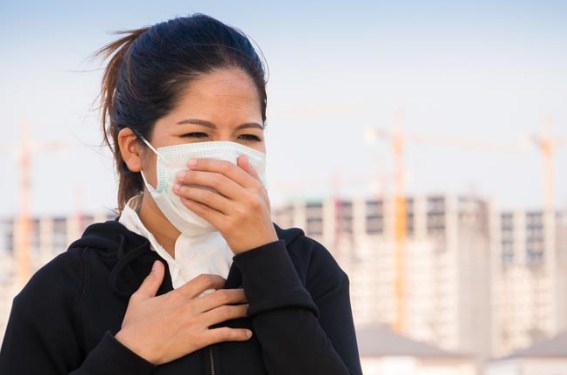
img source : alodokter

Flu or influenza is a viral infection that attacks the respiratory system (a system consisting of the nose, throat, and lungs). Common cold symptoms include fever, headache, cough, aches, decreased appetite, and sore throat.

The incubation period of flu virus including short. You will experience symptoms only within one to three weeks after you first become infected. The period in which the most contagious flu is on a day when symptoms begin to appear for the next three or seven days.

From the latest research at this time, flu can occur due to exposure to flu breath. it is like that conveyed by researchers from the health environment of University Maryland.

"We found that flu cases contaminate the air around them with infectious viruses just by breathing, without coughing or sneezing," Donald Milton, professor of environmental health at the University of Maryland School of Public Health and lead author of the study, said in a statement. "People with the flu produce infectious aerosols (tiny droplets that stop in the air for a long time) even when they do not cough, and especially in the first days of illness, so when someone comes down with influenza, they have to go home. not staying at work and infecting others. "You really have a doctor's permission to go home if you have the flu.

Watch Out!The Flu Can Be Spread Just by Breathing

Saturday, 21 October 2017

How To Prevent Acne From The Beginning With Thyme Extract

How To Prevent Acne From The Beginning With Thyme Extract

Acne is not only annoying when it appears, but can also leave ace scars that ruin the appearance. To eliminate it certainly requires considerable effort and funds, so not just looking for waus to get rid of acne, but should also have the best way to prevent the appearance of acne from the beginning, to keep skin smooth and clean.

Using a cleanser with thyme extract content, regular use of moisturizer and diligent exercise, are some ways that can be done to prevent acne.

Tips overcoming and preventing acne with thyme extract.

In addition to diligent facial cleaning, some of the following ways you mighttry to do asan effort in dealing with acne and prevent it reappearing:

1. Avoid holding the face area

The habit of touching a face or chin rest can increase the risk of acne on the face. THis isrelated the spread of bacteria from the hands that spread on the face, resulting in infections and inflammation of the skin. In addition, never squeeze pimples because it can cause the appearance of sscarring and infection.

2.


Thursday, 12 October 2017

Tips for Getting Rid of Acne Fast

Tips for Getting Rid of Acne Fast
Tips for Getting Rid of Acne Quickly

Acne, or in the medical world called acne vulgaris, is a skin disease that occurs due to chronic inflammation of the pilosebasea follicles (oil glands and hair follicles) characterized by blackheads (blackheads or white spots), papules (reddish surface bumps), pustules (surface lumps purulent), nodules (lumps in purulent), and cysts (watery lumps) in the predilection site. Acne vulgaris is thought to be caused by the following 4 factors:
  • Follicular keratinization
  • Increased production of sebum (oil)
  • Proliferation of bacteria Propionibacterium acne
  • Inflammation of the oil glands

Acne vulgaris is often triggered by the use of external materials such as cosmetic ingredients, hair oils, or drugs (steroids, lithium, anti-epilepsy, iodide). In addition, genetic factors or other diseases (adrenal hyperplasia, polycystic ovary syndrome, excess hormone androgen production) can also trigger acne vulgaris.

If you experience stubborn acne, you should consult with a dermatologist and genitalia to get proper treatment. By performing a regular physical examination, doctors are generally able to diagnose acne vulgaris. If necessary, the doctor can perform laboratory tests.


Furthermore, depending on the severity of the acne you are experiencing, your doctor may prescribe some medications such as topical antibiotics, topical retinoids, birth control pills for women, isotretinoin tablets, antibiotic tablets, and azelaic acid. If needed, your doctor may advise you to undergo other treatment procedures, such as photodynamics, chemical peels, and blackhead extractor.
In addition, you can do some of the following tips:


  • Enough rest
  • Keep personal hygiene, especially facial (wash your face 2x a day, use mild cleansing soap and warm water to clean the face, avoid excessive use of cosmetics)
  • Avoid holding, squeezing, pressing, or solving acne with dirty hands
  • Control stress wisely
  • Consumption of balanced nutritious foods, reduce fatty foods and high carbohydrates, cigarettes, and alcohol

So many explanations from us may be useful.